

 中文
中文Unified Metadata



Adapts to changing business needs, supports user customization, and handles new data sources and formats with ease. Seamlessly integrate various business scenarios to ensure flexibility and adaptability in data management.

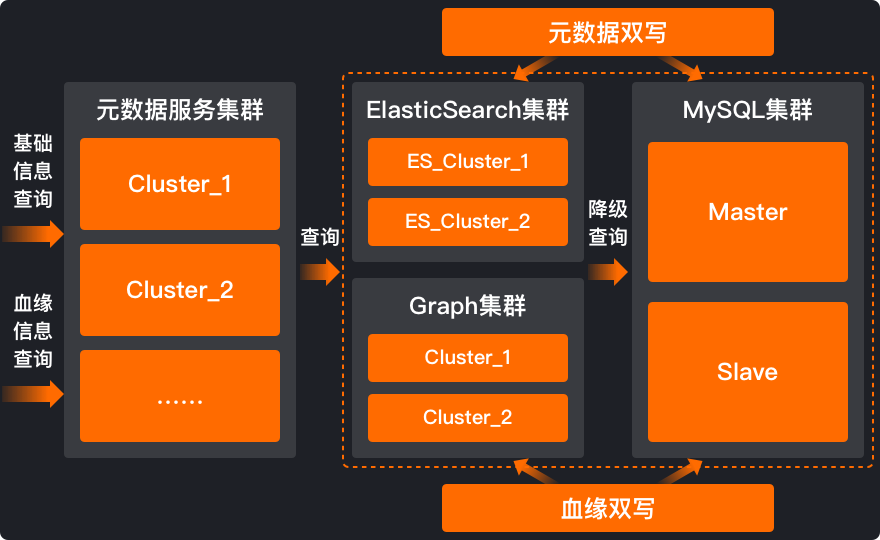
Fast response in 1 second to ensure real-time and accurate metadata. Close to 100% accuracy, reducing data ambiguity and misunderstandings.

Compatible with more than a dozen data sources and engine types to build cross-source data relationships. Flexible construction to form a unified view of data assets.
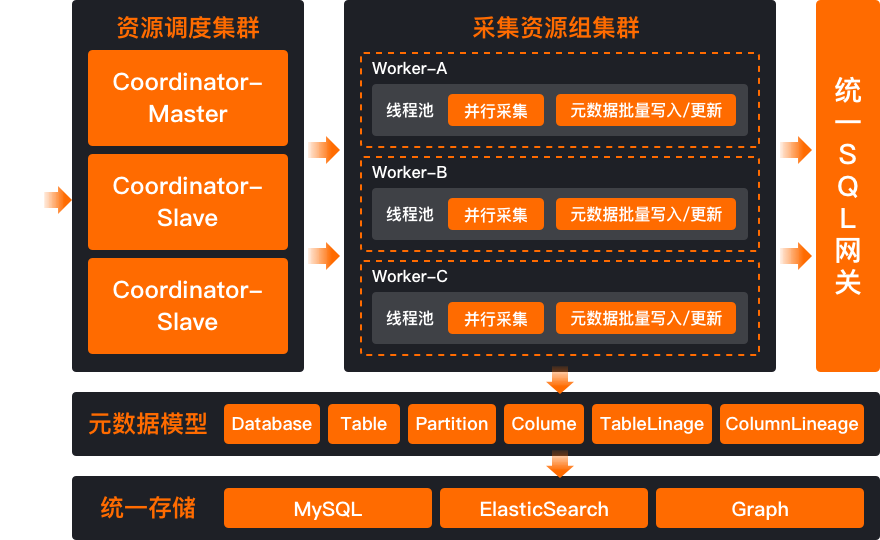
Ensure that the interaction of resources during the collection process is minimized. Realize resource isolation and configuration management to ensure data security.

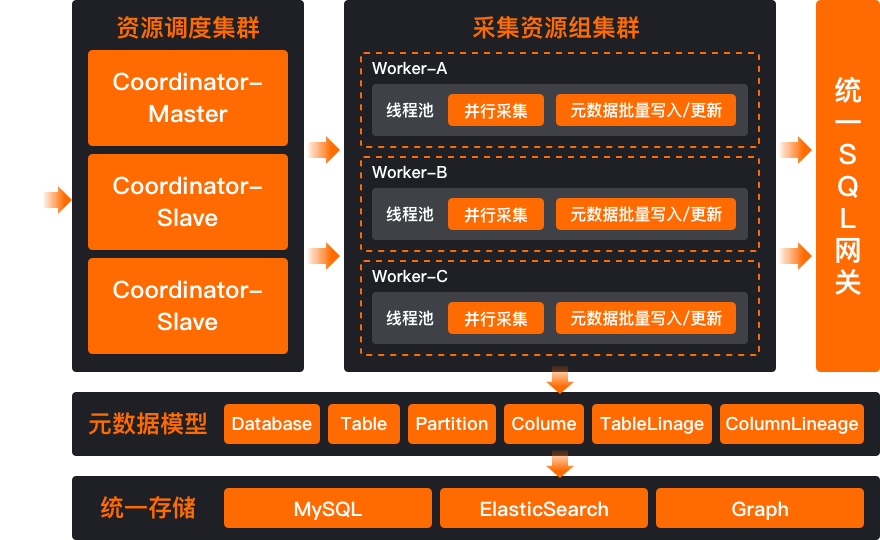
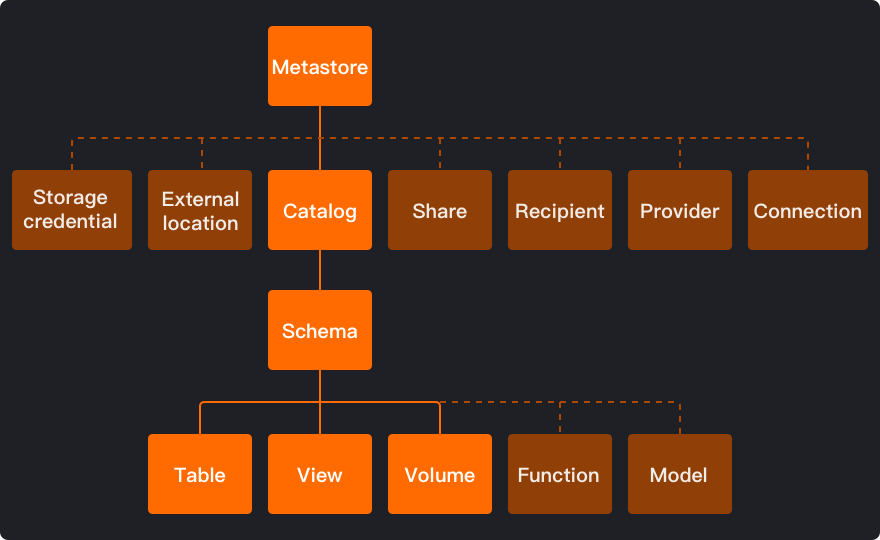
By establishing a standardized data model, different data sources are mapped to a unified storage engine to achieve data integration and sharing.
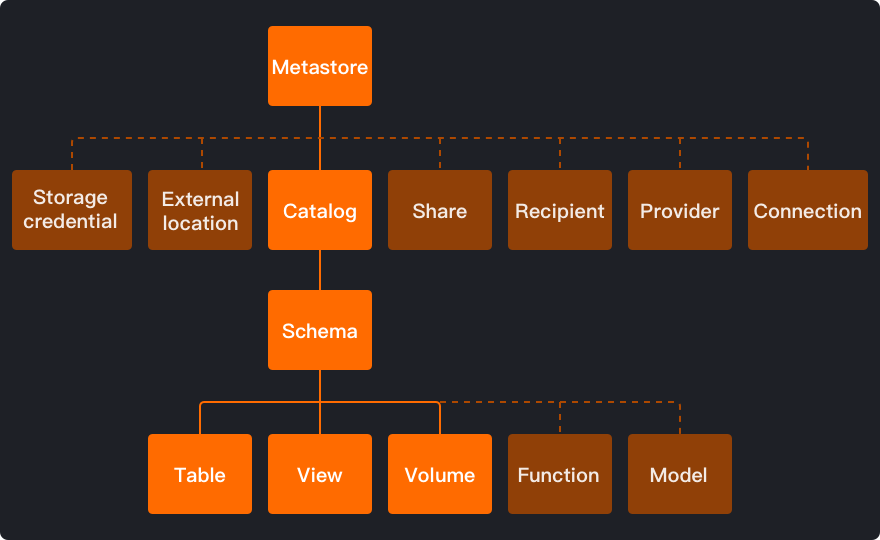
Standardize the unified metadata access portal to ensure the uniqueness of the data, achieve fast location of retrieved data, and avoid data duplication, conflicts, and confusion.
Ensure that the interaction of resources during the collection process is minimized. Realize resource isolation and configuration management to ensure data security.

Business Pain Points
Due to the lack of unified metadata management, enterprises face pain points such as data inconsistency, redundancy, silos and low quality, resulting in data ambiguity, misunderstanding, redundancy, increased storage costs, the formation of data silos, the inability to effectively share and exchange data, and the inability of data to ensure consistency, integrity and reliability, thus affecting business development and innovation, and reducing decision-making efficiency and accuracy.
Business Value
Building a unified kinship through unified metadata can help enterprises to comprehensively understand the source, flow and use of data, and further optimize the governance and management of data. Improve data quality and reliability, enable data sharing and exchange, and provide more comprehensive and accurate data support for business development and innovation.
Business Pain Points
Due to the lack of unified metadata management, enterprises face pain points such as data inconsistency, redundancy, silos and low quality, resulting in data ambiguity, misunderstanding, redundancy, increased storage costs, the formation of data silos, the inability to effectively share and exchange data, and the inability of data to ensure consistency, integrity and reliability, thus affecting business development and innovation, and reducing decision-making efficiency and accuracy.
Business Value
Building a unified kinship through unified metadata can help enterprises to comprehensively understand the source, flow and use of data, and further optimize the governance and management of data. Improve data quality and reliability, enable data sharing and exchange, and provide more comprehensive and accurate data support for business development and innovation.



WeChat Official Account

WeChat Tech Account

Douyin Account

WeChat Group Chat
WeChat Official Account
WeChat Tech Account
Douyin Account
WeChat Group Chat